



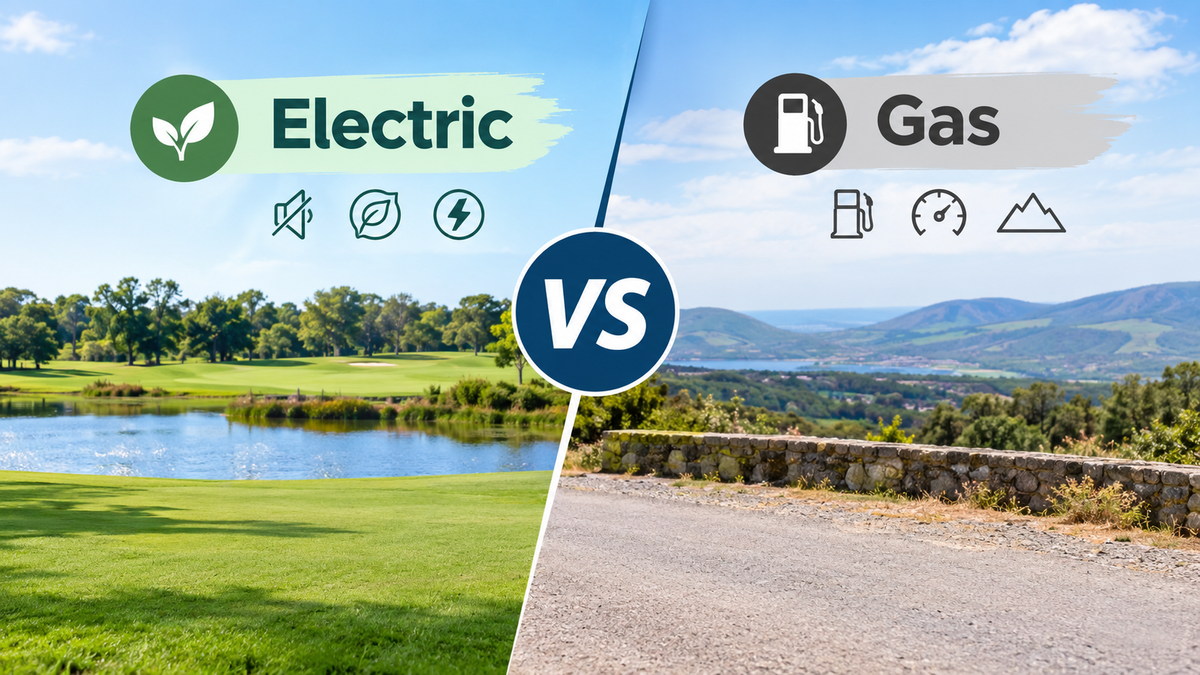
At GIYI, we sell electric golf carts, but that doesn't bias the conclusion below. For most buyers, electric is what we recommend most often: it's safer, easier to maintain, and cheaper to run. Gas is the better choice only if charging isn't convenient for you and you regularly need to haul heavy loads.
Three things decide whether you'll be happy with either choice:
- The battery, not the fuel, drives long-term cost.
- “Street legal” depends on speed class and local rules, not the engine.
- Range anxiety is solvable if you size the battery to your real daily miles.
When you ready to compare models, browse our Golf Carts collection.
Which Should You Choose?
|
Your situation |
Better fit |
Why |
|---|---|---|
|
Neighborhood, HOA, or gated community |
Electric |
Quiet, no exhaust, fewer complaints |
|
Golf course, resort, or campus |
Electric |
Smooth, quiet, easy to charge overnight |
|
Short daily trips (under about 15 miles) |
Electric |
Plug in overnight |
|
Long days with no chance to recharge |
Gas, or a large lithium pack |
Refuel in minutes |
|
Steep hills, heavy loads, regular towing |
Gas, or a high-output lithium utility model |
Sustained power, no battery sag |
|
Farm, ranch, or worksite without outlets |
Gas |
Long range, no charging needed |
Electric vs. Gas Golf Cart
|
Factor |
Electric |
Gas |
|---|---|---|
|
New price (entry level, major brands) |
About $8,000–$12,000; lithium and premium trims cost more |
Similar on comparable entry-level trims; varies by model |
|
Running cost per mile |
Roughly 3–7 cents |
Roughly 10–16 cents |
|
Routine maintenance |
Tires, brakes, battery care |
Oil, filters, spark plug, belt, fuel system |
|
Biggest long-term expense |
Battery replacement |
Engine and drivetrain service |
|
Noise |
Low |
Noticeably louder |
|
Range |
About 25–50 miles (lead-acid); roughly double for many lithium packs |
100+ miles per tank |
|
Refuel / recharge |
8–10 hours (lead-acid), 2–4 hours (lithium) |
A few minutes |
|
Typical stock top speed |
About 12–20 mph (LSV models 20–25) |
About 12–20 mph (LSV models 20–25) |
Pros and Cons of Gas vs. Electric Golf Carts
Electric
- Pro: quiet and smooth, with no exhaust and no fuel to store
- Pro: cheaper per mile and plugs into a standard outlet
- Con: range drops with hills, load, cold, and battery age
- Con: recharging takes hours, and lithium costs more upfront
Gas
- Pro: long range, refueled in minutes, with steady power on hills and loads
- Pro: works anywhere, with no battery bill
- Con: louder, with exhaust smell and more routine servicing
- Con: stale fuel is a risk, and some communities restrict gas carts
Gas vs. Electric Golf Cart for a Neighborhood
Under U.S. federal rules, a low-speed vehicle (LSV) is a four-wheeled vehicle that can exceed 20 mph but not 25 mph, built at the factory with a VIN, seat belts, lighting, and rear visibility equipment. A standard golf cart limited to about 20 mph or less isn't required to meet that standard, but that doesn't make it road-legal.
Check this before you buy
- Read your city or county ordinance for “golf cart,” “low-speed vehicle,” and “neighborhood electric vehicle,” and note the road speed limits where they're allowed.
- Ask your state motor vehicle agency whether you'd need registration, plates, a license, or insurance.
- Get your HOA's rules in writing, including noise limits and any restriction on gas vehicles.
- Ask your insurer. Standard policies may not cover a golf cart.
Gas vs. Electric Golf Cart Price
Purchase price
Guides disagree on whether gas or electric costs more because price depends on the model. One entry-level comparison listed gas at $9,950 and electric at $10,170. Battery type, seating, street-legal equipment, and brand move the price more than the engine does, so compare two specific trims. You can see current options in our Golf Carts collection.
Running cost per mile
Depending on gas prices and fuel economy, fuel runs roughly 10–16 cents per mile. A dealer source puts charging near 2 cents per mile; our own estimate, assuming 0.2–0.35 kWh per mile at the wall and $0.15–$0.20 per kWh, is 3–7 cents. At 1,500 miles a year, that's about $150–$240 for gas versus $45–$105 for electricity: a gap of roughly $100–$150 per year, or $1,000–$1,500 over ten years.
The battery bill
- Lead-acid: commonly lasts 3–5 years, sometimes longer with good care.
- Lithium (LiFePO4): sellers commonly cite 8–10 years or more, with packs typically costing roughly $900–$3,500 depending on voltage, capacity, and brand.
Ten-year cost example
It assumes 1,500 miles a year, gas at about $3.75 per gallon, electricity at $0.15–$0.20 per kWh, and carts bought at similar prices. Gas servicing is assumed at $125–$250 per year, based on a commonly quoted figure of about $125 per engine service.
|
Ten-year cost |
Gas |
Electric (lead-acid) |
Electric (lithium) |
|---|---|---|---|
|
Fuel or electricity |
$1,500–$2,400 |
$450–$1,050 |
$450–$1,050 |
|
Routine servicing |
$1,250–$2,500 |
About $100–$300 (tires and brakes extra) |
About $0–$200 |
|
Battery replacements |
None |
2 sets: $1,600–$4,000 |
Usually none |
|
Approximate running total |
$2,750–$4,900 |
$2,150–$5,350 |
$450–$1,250 (plus any lithium upfront premium) |
For a low-mileage owner, a lead-acid electric cart and a gas cart can cost about the same over ten years. Lithium pulls ahead the longer you keep the cart and the more you drive it.
Gas vs. Electric Golf Cart Speed
- Stock speed is similar. Most standard golf carts, gas or electric, are factory-limited to roughly 12–20 mph
- Top speed can mislead. A lead-acid cart loses voltage as it discharges, so it can feel slower late in a long run or on hills.
- Modifying has trade-offs. Speeding up a golf cart can change its legal class, may void the warranty, and pushes brakes and suspension beyond their design.
Are Gas Golf Carts Loud?
Yes-according to publicly available data, the noise level of internal combustion engine vehicles typically ranges from 65 to 90 decibels, whereas for electric vehicles, it is around 45 to 60 decibels.
Power, Hills, and Hauling
- Light hills and neighborhood streets: a modern electric cart is fine.
- Steep, long grades with four or more passengers: a gas engine delivers steady torque, while a lead-acid pack sags under sustained load.
- Regular hauling or towing: check the rated payload and towing capacity on the spec sheet.
Range and Recharging: How to Avoid Getting Stranded
Lead-acid electric carts commonly offer about 15–25 miles per charge, and lithium can roughly double that. Hills, extra passengers and cargo, aging batteries, cold, and under-inflated tires all shrink it. A gas cart with a 5–6 gallon tank can go well over 100 miles.
To size an electric cart so you're never stranded:
- Measure your real daily miles, including your longest regular trip, with a phone app.
- Add a 30–50% buffer for hills, passengers, and battery aging.
- Choose a pack that covers that number comfortably. If it sits near the top of what lead-acid can do, consider lithium or gas.
- Check the battery meter before leaving, and charge after every use rather than waiting until the pack is low.
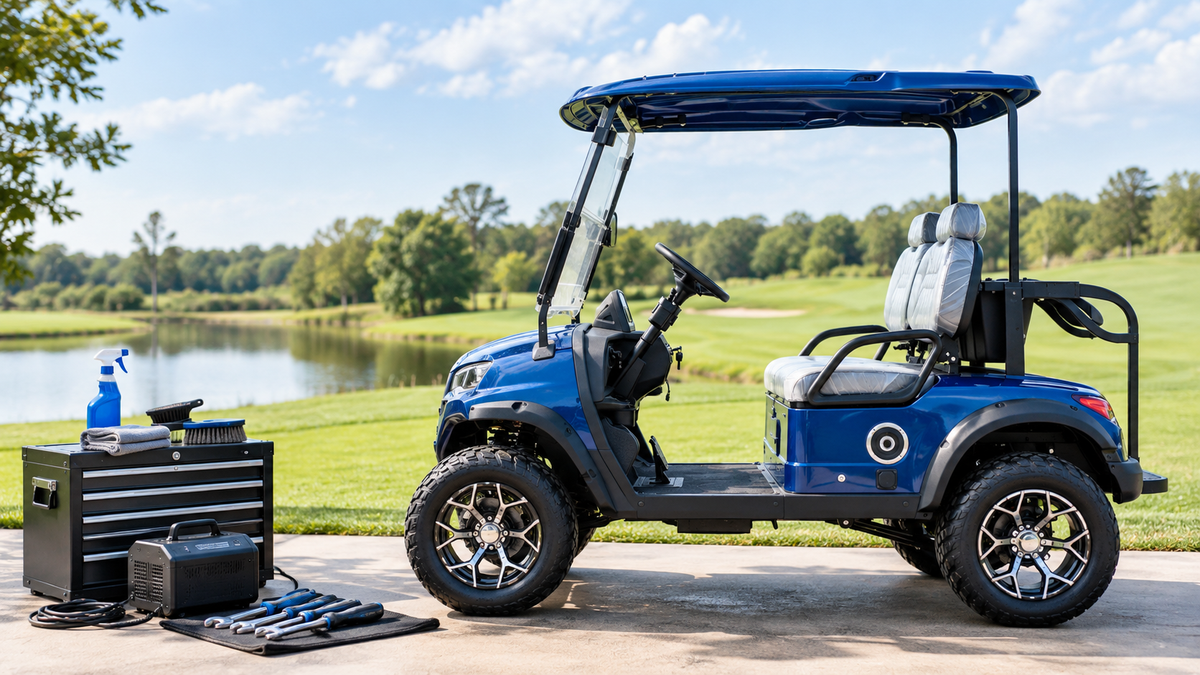
Maintenance, Winter Care, and Storage
- Electric, lead-acid: check water levels regularly with distilled water, keep terminals clean, and charge in a ventilated area.
- Electric, lithium: essentially no watering or terminal care.
- Gas: change oil and filters on the schedule in your owner's manual, and inspect the spark plug and belt. Use the ethanol blend your manual allows and add fuel stabilizer if the cart will sit.
- Cold: lead-acid capacity drops in freezing weather, and a discharged pack can freeze and crack. Charging a standard lithium pack below 32°F can damage it, so charge in a garage or choose a pack with low-temperature protection.
- Heat: extreme heat shortens battery life for both lead-acid and lithium.
Buying Used: Inspect Before You Pay
Condition matters more than powertrain.
- Electric: have the batteries load-tested and check their date codes. A $4,000 cart with batteries due for replacement can really be a $5,500 cart.
- Gas: look for oil leaks, smoke, hard starting, and rough idle.
2 Seater or 4 Seater? Choosing a GIYI Electric Golf Cart
Pick seats for your most common trip, not the occasional one.
- Solo rides, couples, and short errands: our 2 Seater Electric Golf Cart is the compact choice.
- Families and regular passengers: our 4 Seater Electric Golf Cart gives everyone a seat.
Frequently Asked Questions
Which is better for a neighborhood: gas or electric?
Electric, for most neighborhoods: it's quiet, has no exhaust, and rarely draws complaints.
How fast do golf carts go?
Most stock carts of either type are limited to roughly 12–20 mph. Factory LSVs are designed for 20–25 mph.
Are gas golf carts loud?
They're louder than electric carts, with commonly cited figures of roughly 65–90 dB versus 45–60 dB.
How long do electric golf cart batteries last?
Lead-acid commonly lasts 3–5 years. Lithium is commonly cited at 8–10 years or more, though those claims often come from sellers, so check the warranty.What's the average lifespan of a golf cart?
Can I make my golf cart street legal?
In some places an ordinary golf cart can't be converted at all. The most reliable route is a factory-built LSV with a VIN, after confirming local rules.
Is it safe to charge or run these carts indoors?
Electric carts can be charged in a garage, but charge lead-acid packs in a ventilated area. Never run a gas cart in a closed garage.
in conclusion:
Choose electric if you want a quiet, low-fuss cart for a neighborhood, course, or campus and your daily miles fit the battery's range. Choose gas if you need long range, quick refueling, or strong hauling power where charging isn't practical.


Leave a comment
This site is protected by hCaptcha and the hCaptcha Privacy Policy and Terms of Service apply.