


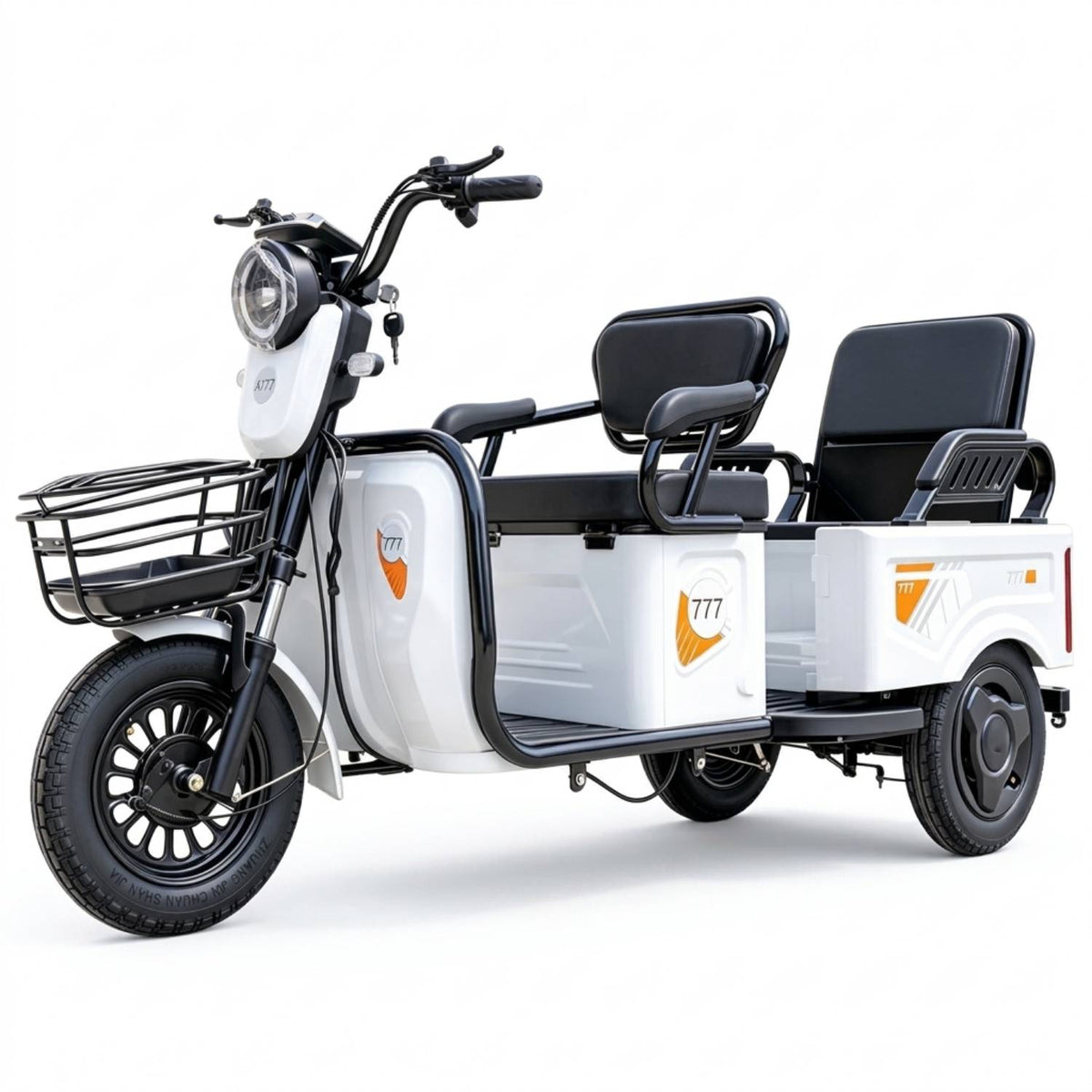


GIYI surveyed used golf carts on the market and found that they sell for anywhere between $3,000 and $8,000. The cheaper ones are mostly older models, while carts equipped with newer lithium batteries cost more. Although we sell new electric golf carts, we want to be upfront with you: for many buyers, purchasing a used cart is actually the better value.
Used Golf Cart Price Ranges in 2026
The tiers below combine figures from several dealer and price guides:
| Tier | Typical cart | Typical price |
|---|---|---|
| Budget / older | Roughly 8+ years old, aging batteries, visible wear | $1,800 – $4,500 |
| Mid-range | Roughly 4–8 years old, good batteries, clean body and seats | $4,500 – $7,500 |
| Late-model / upgraded | Newer (about 1–3 years), lithium, lifted, or 4-passenger with strong accessories | $7,500 – $12,000+ |
By powertrain:
| Cart type | Common range | Main price driver |
|---|---|---|
| Gas | $1,500 – $7,000 | Engine condition, age |
| Electric (lead-acid) | $2,000 – $8,000 | Battery age |
| Electric (lithium) | $3,500 – $10,000+ | Pack age and brand |
A higher price may mean the cart has a new battery or very little wear, while a lower price may reflect the cost of an upcoming battery replacement or mechanical problems.
How to Price a Used Golf Cart: 5 Steps
1. Identify the exact cart. Get the brand, model, year, voltage (36V, 48V, 72V), seat count, and power type. A two-seat and a four-seat of the same year are different products.
2. Collect 5–10 comparable listings. Search dealers, Facebook Marketplace, Craigslist, and golf course fleet sales for the same make, model, and similar year in your area.
3. Find the middle. Drop the cheapest and most expensive outliers.
4. Adjust for four things.
- Battery age and type
- Condition: seats, body, tires, brakes, steering, controller
- Upgrades: lift kits, lights, enclosures, and stereos add value, but rarely their full cost
- Local demand: prices can differ noticeably between regions, so only compare listings in your own area
5. Set three numbers: a target price, a walk-away price, and an opening offer slightly below target.
The Battery Factor
Lifespan: flooded lead-acid typically lasts 3–5 years, sometimes up to about 6 with good care. Neglected packs can fail in two. Lithium is commonly quoted at 8–10 years or more.For more details, please see:What's the average lifespan of a golf cart?
Replacement cost:
| Battery type | Typical full-set cost |
|---|---|
| Flooded lead-acid | $600 – $1,200 |
| AGM | $1,200 – $2,000 |
| Lithium | $1,200 – $3,000+ |
Switching to lithium can add cost, since many carts need a lithium-compatible charger and sometimes wiring or tray changes.
Turn battery age into a number:
| Battery age (lead-acid) | Price adjustment |
|---|---|
| Under 2 years | At or above baseline |
| 2-4 years | At baseline; ask for proof of age |
| Over 4 years | Subtract most or all of a replacement set |
| Unknown | Assume the worst, or make your offer conditional on a load test |
How to check: ask for receipts, find the date code on each battery, and test drive the cart after a full charge. If it struggles on hills or loses power quickly, the pack is tired.
When Buying New Makes More Sense
Run the numbers on the used cart you're considering: asking price, plus a battery set if it's due, plus tires, plus any shipping. If that total approaches the price of a new cart, the used cart has lost its advantage.
For reference, our 4 seater electric golf cart is currently priced at $8,199, and our 2 seater electric golf cart at $7,699.
What a new purchase from us includes:
- Free shipping across the lower 48, delivered fully assembled
- A 1-year warranty covering the full vehicle and the battery
- A 60V 100Ah battery on both models, with up to 44 miles of range and a top speed of 20 MPH
If the used cart you're looking at is a clean, well-documented example priced near the middle of its tier, buy it.
Dealer vs. Private Seller
| Dealer | Private seller | |
|---|---|---|
| Price | Usually higher | Usually lower |
| Reconditioning | Often included | Rarely |
| Warranty | Sometimes | Almost never |
| Paperwork | More complete | Varies |
| Negotiation room | Moderate | Often more |
A higher dealer price can still be the better deal if it includes new batteries and a service check.
Inspection Checklist
Do this in person and drive the cart.
Every cart
- Confirm the serial number matches the paperwork and the listing
- Check all four tires, not just the front two
- Test the brakes, including the parking brake, and check steering for play
- Inspect the frame and axle for rust, cracks, or bends
- Test lights, horn, and accessories
Electric carts
- Check battery date codes, terminal corrosion, and swollen cases
- Confirm the charger works and matches the battery type
- Drive up a hill and note power and range
Gas carts
- Cold start it and listen for knocking
- Look for oil or fuel leaks and heavy smoke
- Check that it shifts smoothly and the throttle responds normally
Walk away if:
- The seller won't allow a test drive or inspection
- The serial number is missing or doesn't match
- The price is far below comparable carts with no clear reason
- A "street-legal" claim comes with no paperwork
Paperwork, Titles, and Street-Legal Carts
- Most standard golf carts have a serial number, not a VIN, and no title.
- Get a bill of sale from a private seller with the year, make, model, serial number, price, and both parties' names and signatures.
- A cart generally gets a title only after conversion to a low-speed vehicle (LSV), which involves an inspection, safety equipment, and a DMV application.
- With a "street-legal" listing, ask for the title, registration, and VIN.
- If the cart is financed, ask for lien release documents.
- Check HOA, community, or campground rules before buying.
Street-legal rules vary by state and city, so call your local DMV before you pay.
The Real Cost of Owning a Used Cart
| Cost | Typical range |
|---|---|
| Battery replacement (when due) | $600 - $3,000+ |
| Tires | Often around $50–$60 each for basic tires; |
| Insurance | Estimates vary by state and insurer. |
| Shipping from a distant seller | Varies widely; get a quote first |
| Charger replacement | Needed if you switch to lithium |
A cheap cart with a dead battery can cost more than a pricier cart with a new one.
Negotiation Tips
- Ground your offer in facts: comparable listings, battery age, needed repairs.
- Ask first: "When were the batteries last replaced?" often tells you what you need.
- Make it conditional: "I'll pay $X if a shop's load test shows healthy batteries."
- Bundle requests: ask for a new charger or delivery instead of only a lower price.
- Be ready to walk.
If you're selling: price near the market middle, photograph the serial plate, battery date codes, and receipts, and describe the cart honestly.
FAQ
What is a good price for a used golf cart in 2026?
For a solid mid-age cart with healthy batteries, roughly $4,500–$7,500. Older budget carts run $1,800–$4,500. Newer, lithium, or heavily upgraded carts run $7,500–$12,000+.
How much does a golf cart battery replacement cost?
Lead-acid sets typically cost $600–$1,200, AGM sets more, and lithium $1,200–$3,000 or more depending on the cart.
How long do used golf carts last?
Many keep running well past 10 years, but lead-acid batteries typically need replacing several times over that period.
Is a used or new golf cart the better value?
A clean, well-documented used cart priced mid-tier is often the better value. Once the used price plus battery and tire work approaches a new cart's price, new wins. Browse our golf carts to compare.
Bottom Line
A fair price is a market baseline adjusted for batteries, condition, upgrades, and local demand.


Leave a comment
This site is protected by hCaptcha and the hCaptcha Privacy Policy and Terms of Service apply.