


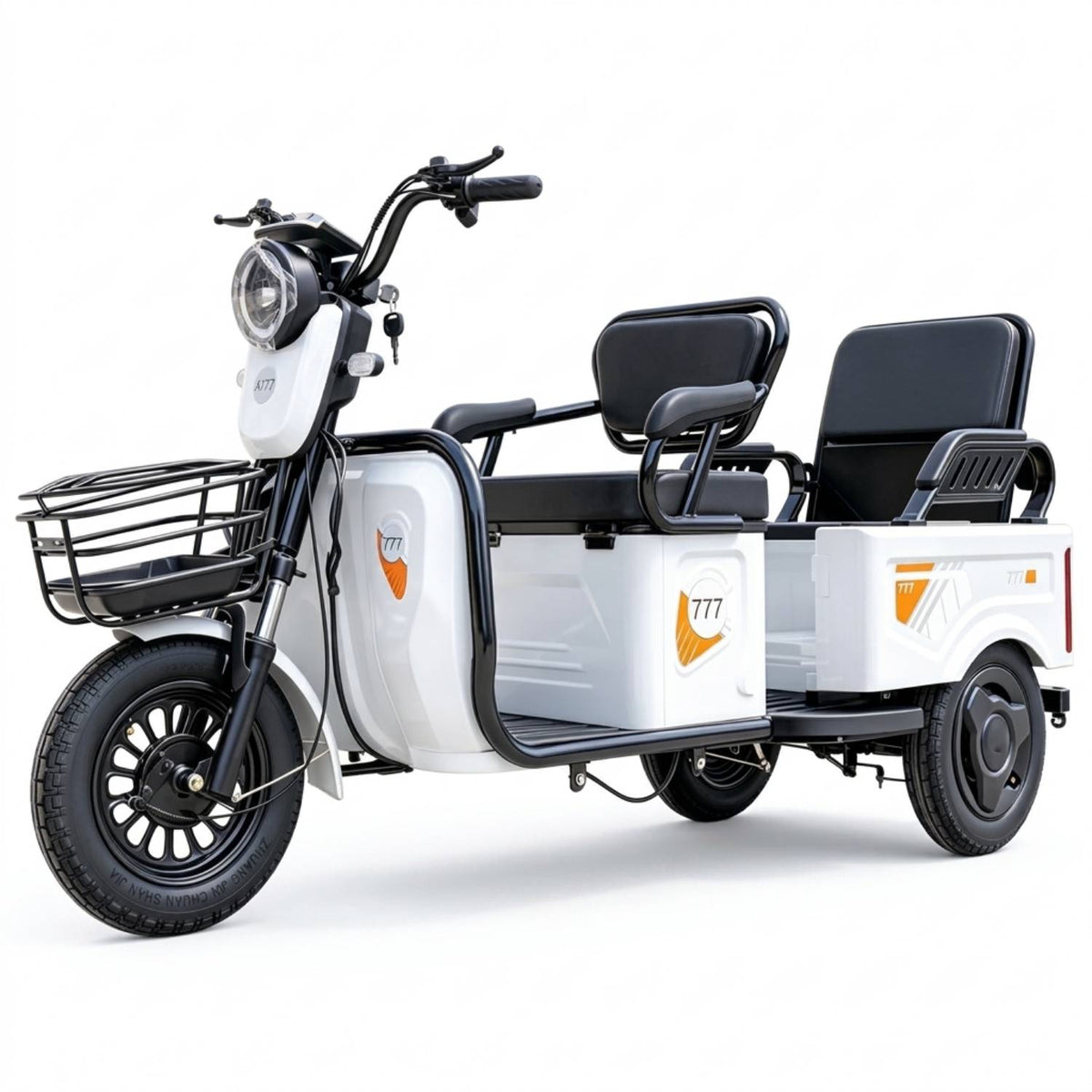


Based on our hands-on testing, a well-maintained electric golf cart can sit idle for 1 to 3 months. With a lithium iron phosphate (LiFePO4) battery, the average is about 3 months, and the longest we've seen is 6 months. The battery determines the cart's service life, and overall, battery type, temperature, and the storage environment while the cart is parked also affect how long it can sit idle.
How Long Can Each Type of Cart Sit?
| Cart type | Comfortable window* | Outer limit (prepared, cool, dry) | Recharge / check every |
|---|---|---|---|
| Flooded lead-acid | About 1 month | 2–3 months | 4–6 weeks, or keep on a maintainer |
| AGM / gel lead-acid | 2–3 months | Up to about 6 months | 2–3 months |
| Lithium (LiFePO4) | About 3 months | About 6 months, stored at ~50% charge | About every 3 months |
| Gas | About 30 days with untreated fuel | 6–12 months with fresh stabilized fuel and a maintained 12V battery | Start it every 2–4 weeks if you can |
*Fully charged before parking, moderate temperatures, nothing draining the batteries.
Older batteries, dirty battery tops, heat, and accessories all shorten them.
What Happens to the Battery While the Cart Sits
Self-discharge. Every battery loses charge on its own, and the rate depends on chemistry and temperature:
- Flooded lead-acid: roughly 3–5% per month in cool conditions, and up to 15% when hot.
- AGM lead-acid: about 1–3% per month.
- LiFePO4: about 1–3% per month for the cells alone. With BMS and electronics, real-world loss is often 3–6%.
Parasitic drain. Self-discharge is slow. Drain from the cart itself is often what flattens a pack:
- The Run/Tow switch left in Run.
- Accessories such as radios, GPS, lights, and USB ports. They are often wired to just one or two batteries, so those batteries sink lower than the rest and drag the pack down.
Sulfation (lead-acid). A lead-acid battery that sits partly discharged develops hardened lead sulfate crystals on its plates. That means permanent capacity loss.
Over-discharge (lithium). A BMS can cut the pack off at a low charge, but it can't stop self-discharge or its own standby draw.
Temperature. Heat speeds self-discharge and ages the battery.
How much charge will you lose?
Lead-acid starts at 100%, lithium at ~50%.
| Storage scenario | After 1 month | After 3 months | After 6 months |
|---|---|---|---|
| Flooded lead-acid, cool (3–5%/mo) | ~95–97% | ~85–91% | ~70–82% |
| Flooded lead-acid, hot or old (10–15%/mo) | ~85–90% | ~55–70% | Likely under 40% |
| AGM / gel (1–3%/mo) | ~97–99% | ~91–97% | ~82–94% |
| LiFePO4 at ~50%, with BMS drain (3–6%/mo) | ~44–47% | ~32–41% | ~14–32% |
Flooded Lead-Acid: Timeline and Voltage Guide
- Weeks 1–4: Usually fine if the pack was fully charged.
- Months 2–3: A pack stored full and cool is probably still above 75%. Recharge before it drops below that.
- Beyond 3 months without a charge: Sulfation risk climbs, especially in warm climates or with older batteries.
- A year without a charge: Expect permanent capacity loss. Some packs are salvageable, many aren't.
Measure each battery after it has rested at least 6 hours.
| State of charge | 6V battery | 8V battery | 12V battery | 48V pack (eight 6V) |
|---|---|---|---|---|
| 100% | ~6.35 | ~8.5 | ~12.7 | ~50.8 |
| 75% | ~6.2 | ~8.3 | ~12.4 | ~49.6 |
| 50% | ~6.1 | ~8.1 | ~12.2 | ~48.8 |
| 25% | ~6.0 | ~8.0 | ~12.0 | ~48.0 |
| Discharged | ~5.95 | ~7.9 | ~11.9 | ~47.6 |
Rule of thumb: if the batteries rest at about 75% (roughly 6.2V per 6V battery) or lower, recharge now.
A 48V pack is usually eight 6V, six 8V, or four 12V batteries. Measure every battery, not just the pack.
AGM and gel: these self-discharge more slowly, so plan a charge every 2–3 months.
Lithium (LiFePO4): Different Rules
Lithium doesn't sulfate and self-discharges less, but storage charge matters and a pack that falls too low may not recover on its own.
- Store at roughly 40–60% charge, not 100%. Sitting full is harder on the cells, and sitting near empty risks over-discharge.
- Check about every 3 months, sooner in hot weather.
- Keep it cool and dry.
- Use the matching lithium charger. Never a lead-acid charger.
- Look for a storage or sleep mode in the manual that cuts standby draw.
- Don't judge charge by voltage.
- Don't charge below freezing unless the pack has low-temperature protection or a heater.
Gas Carts: Fuel Is the Clock
- Fuel: Ethanol-blended gas can start to degrade within a month or two. Pure gasoline lasts around 6 months, and stabilized fuel much longer. Stale fuel causes hesitation, smoke, hard starts, and a gummed carburetor or injectors.
- 12V starter battery: It self-discharges like any lead-acid battery. Put it on a maintainer or disconnect it.
Two common approaches. Check your manual for your engine:
- Stabilizer: Fill the tank (about 95% full), add stabilizer at the labeled rate, then run the engine several minutes so treated fuel reaches the carburetor or injectors.
- Drain the carburetor: Follow the manual's procedure. This suits carbureted engines facing a long layup.
Plan to refresh the fuel and check the whole cart every 6–12 months. Run the engine to full operating temperature every few weeks if you can.
How to Store a Golf Cart, Step by Step
Electric (lead-acid)
- Charge fully with the cart's approved charger.
- Clean the terminals and battery tops. Dirt and moisture create small leakage paths. Use baking soda and water, rinse lightly, and dry. Keep it out of the cells.
- Check water levels (flooded only) with distilled water.
- Key off and removed, forward/reverse in neutral, Run/Tow switch to Tow.
- Plugged in or disconnected?
Electric (lithium)
Set the charge to about 40–60%, turn off the main switch or enable storage mode per the manual, disconnect accessories, and set a 3-month reminder.
Gas
Treat the fuel (or drain the carburetor), and maintain or disconnect the 12V battery.
Every cart
- Park indoors if you can: dry, above freezing, out of summer heat. Under a breathable cover is the next best choice. Plastic tarps trap moisture.
- Tires: Check pressure and move the cart a few inches every few weeks to avoid flat spots.
- Rodents: Seal entry points and check the wiring harness when you return.
Plugged in, or disconnected?
For electric lead-acid carts, golf course fleet guidance is to leave the charger plugged in during storage and check the batteries and charger monthly for water level and proper operation.
- Leave it plugged in if you have an automatic charger designed for it and will check water monthly.
- Don't if the charger has no automatic shutoff or float mode. It can overcharge and boil off electrolyte. Use a maintainer or disconnect the pack instead.
- Disconnect (after a full charge, with the cart off) if you have accessories or will store it for more than a month or two. Disconnecting may reset memory features on some radios or controllers.
- Lithium: a charger left connected may hold the pack at 100% for months.
Waking Up a Cart That's Been Sitting
Electric, lead-acid
Charge in a ventilated area, wear eye protection, keep sparks away, and put the cart in Tow before working.
- Inspect. Cracked or bulging cases, leaks, heavy corrosion. If a battery is bulged, leaking, or frozen, don't charge it. Replace it.
- Clean and tighten the terminals.
- Check water (flooded) and top up with distilled water if needed.
- Measure each battery's resting voltage and compare to the table above.
- Charge fully. This can take most of a night.
- Retest after charging. A fully charged flooded cell reads around 1.265–1.280 on a hydrometer, and cells shouldn't differ by more than about 0.050.
- Test drive and watch range and power. A pack that charges fine but dies quickly under load is telling you something.
If the charger won't start: this is common when pack voltage is too low for the charger to detect. Don't force it. Test each battery, look for one very low battery, and have a golf cart shop charge them individually.
What to expect: a cart that sat a few months and was recharged promptly is usually fine. One that sat deeply discharged for 6–12+ months often has permanent capacity loss, and many owners end up replacing the pack.
Electric, lithium
Check the display or app. If the pack won't power on or is in protection mode, don't jump it or force it with a lead-acid charger.
Gas
Check the fuel. Sour smell or dark color means it's stale. Replace it, and clean the carburetor or injectors if it runs rough.
Has the damage already been done?
| What you notice | Likely cause | What to do |
|---|---|---|
| Won't power on, very low voltage | Deep discharge | Test each battery and attempt a proper charge. A replacement may be needed |
| Powers on but range is cut in half | Sulfation or lost capacity | Full charge, retest, consider a load test |
| One battery far below the others | Weak or failed battery | Replace it, or the whole set if the pack is old |
| Charger errors out, or batteries get hot | Sulfated or failed cells | Stop charging and have it inspected |
| Rotten-egg smell, hot case, bulging | Failing battery | Stop charging and replace |
| Gas cart hesitates, smokes, won't start | Stale fuel or gummed carburetor | Fresh fuel and a cleaning |
| Lithium pack won't wake | BMS protection after over-discharge | Contact the manufacturer |
Range per Charge vs. Idle Time
| Lead-acid | Lithium (LiFePO4) | |
|---|---|---|
| Range per charge | About 15–25 miles | About 25–50 miles |
| Typical lifespan | About 4–6 years (2–4 if neglected) | Often quoted at 8–10 years or 3,000–5,000 cycles |
A 48V label describes pack voltage, not range. Range comes from battery capacity (amp-hours), cart weight, hills, and tire pressure. A fully loaded four-passenger cart works harder than a two-seater, which is worth considering when you compare our 4 Seater Electric Golf Cart and 2 Seater Electric Golf Cart against how you'll use the cart.
How well you store a cart affects battery lifespan as much as the battery type does. A well-stored lead-acid pack can outlive a neglected one by years.
Can dead golf cart batteries be revived?
Sometimes. If the cart sat only a few months and the batteries are sound, a full charge may bring them back.
Bottom Line
Charge it, cut the drains, keep it cool and dry, and check it on schedule. If you're ready for a new cart, browse our full golf cart collection.



Leave a comment
This site is protected by hCaptcha and the hCaptcha Privacy Policy and Terms of Service apply.