



Are electric tricycles worth it? For the right rider, they can be a practical alternative to a two-wheel e-bike, especially when stability, passenger seating, and cargo space matter more than having the lightest or most compact ride.
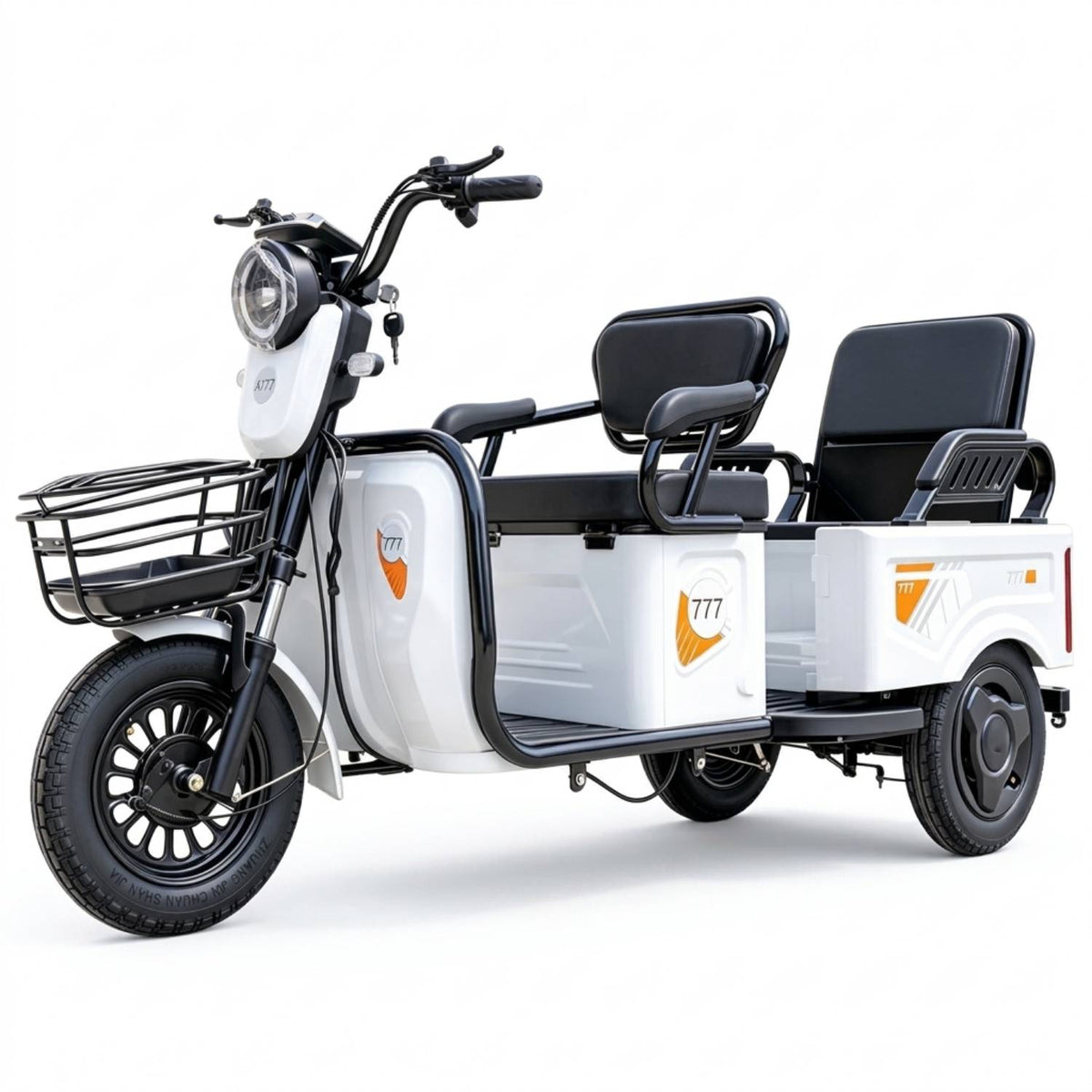
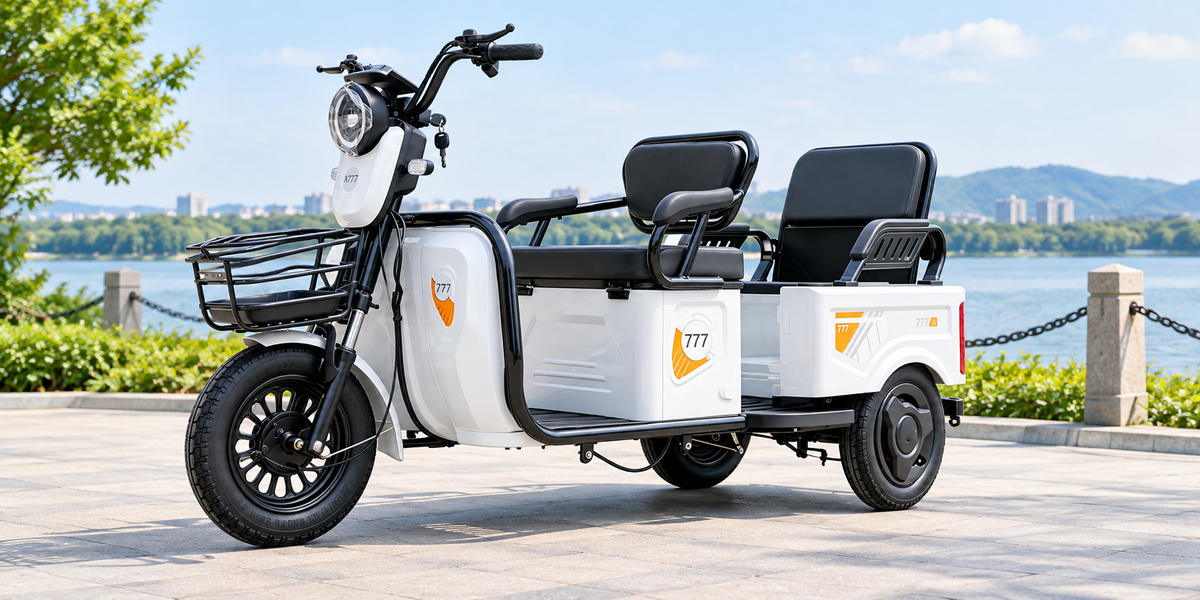
For example, the GIYI Electric Cargo Tricycle – 2-Passenger Seat with Convertible Storage is designed around everyday local transportation. It has a 500W electric motor, a 48V 20Ah lead-acid battery, a claimed range of up to 31 miles, a top speed of 20 MPH, seating for two passengers plus cargo, and a convertible rear seat that can switch between passenger and cargo use.
So, is an electric tricycle worth the money?
It depends less on the fact that it has three wheels and more on whether its specific combination of stability, electric assistance, cargo capacity, passenger space, and everyday usability matches the way you plan to use it.
What Makes an Electric Tricycle Worth Considering?
An electric tricycle combines a three-wheel frame with an electric motor and battery.
The three-wheel layout changes how you ride. You do not need to keep balancing on two wheels when you come to a stop, which can be useful for errands, neighborhood trips, and frequent stops.
The electric motor addresses a different problem: pedaling effort.
When the tricycle is carrying a rider, another passenger, and cargo, the additional weight matters. Electric assistance can make local transportation more practical than relying entirely on human power.
The GIYI model takes that idea a step further by combining passenger and cargo use in one vehicle. Its rear seat can be converted between passenger mode and cargo mode, while the front basket provides another storage area.
That means you are not buying a three-wheel vehicle simply for the extra wheel. You are buying a vehicle that can serve several everyday transportation needs.
What Does the GIYI Electric Cargo Tricycle Offer?
The specifications for the GIYI electric cargo tricycle are as follows:
| Feature | GIYI Electric Cargo Tricycle |
|---|---|
| Price | $2,499 |
| Motor | 500W electric motor |
| Battery | 48V 20Ah lead-acid |
| Driving range | Up to 31 miles |
| Top speed | 20 MPH |
| Climbing ability | Up to 30° |
| Charging time | 8–9 hours |
| Seating | 2 passengers + cargo |
| Maximum load | 330.7 lbs |
| Vehicle weight | 178.6 lbs |
| Dimensions | 76.8" L × 27.6" W × 43.3" H |
| Front basket capacity | 22 lbs |
| Rear cargo box capacity | 33.1 lbs |
| Brakes | Front and rear drum brakes |
| Ground clearance | 9.4" |
| Frame | Iron |
| Tires | 3.00-8 |
| Lighting | Front LED, rear tail light, turn signals, horn |
| Display | LCD dashboard |
These specifications apply to the GIYI and should not be considered typical for all electric tricycles.
Is an Electric Tricycle Worth It for Carrying Passengers and Cargo?
This is where the GIYI model has a more specific advantage than a basic electric tricycle.
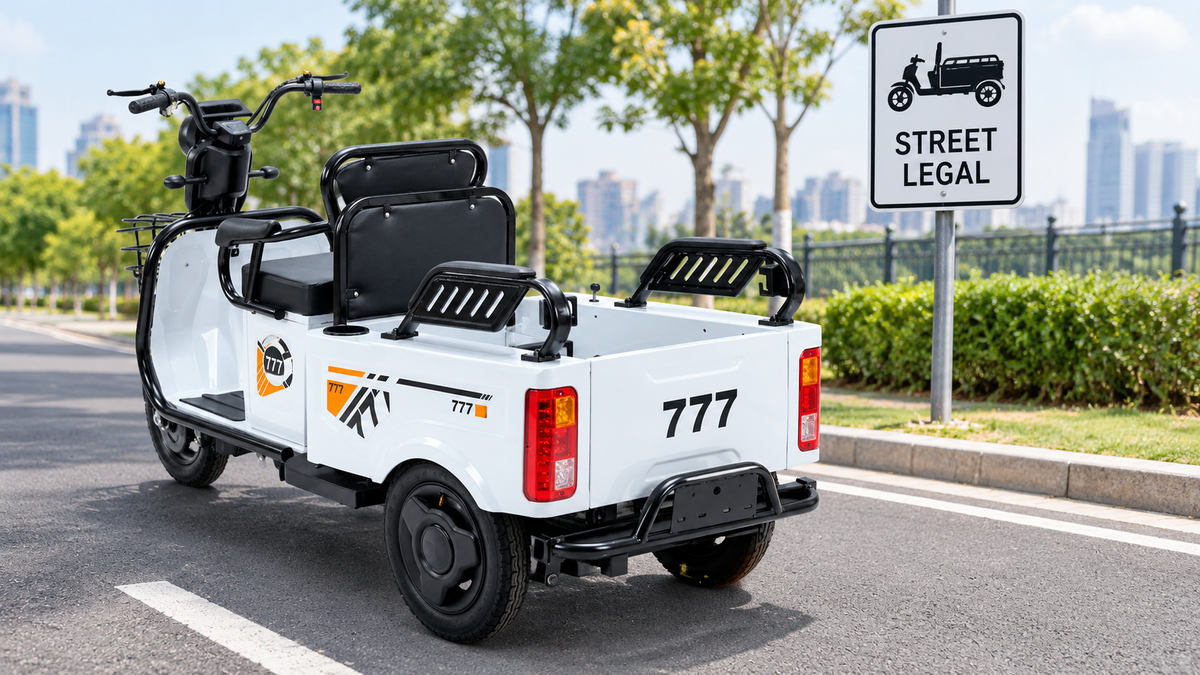
The rear seat is convertible.
When you need to carry another person, the tricycle can be used in its passenger configuration. When you need more carrying space instead, the rear seating area converts to cargo use.Our product features a front cargo basket with a 22-pound capacity and a rear cargo box with a 33.1-pound capacity.
That makes the design useful for situations such as:
- Grocery shopping
- Carrying tools
- Local errands
- Transporting everyday supplies
- Picking someone up
- Combining passenger and cargo transportation
This flexibility can make a three-wheel electric vehicle more useful than a traditional bicycle when carrying things is part of the reason you want one.
However, there is an important distinction between the individual storage areas and the 330.7-lb maximum load rating.
The 330.7-lb figure is the listed maximum load for the vehicle. It should not be interpreted as 330.7 lbs of cargo in addition to two passengers. The rider, passenger, cargo, and other applicable weight all need to remain within the manufacturer's stated limit.
Is 31 Miles of Range Enough for Everyday Riding?
The GIYI tricycle is listed with a driving range of up to 31 miles per charge.
That can be enough for many local trips, but “31 miles” should not be treated as a guaranteed distance under every riding condition.
Actual range can vary with factors such as:
- Rider and cargo weight
- Terrain
- Riding speed
- Frequency of stops
- Battery condition
- Temperature
- Riding conditions
The better question is:
How far do you actually need to travel between charging opportunities?
If most of your trips are local, a claimed range of up to 31 miles can provide useful room between charges. The GIYI product page lists an 8–9 hour charging time, so planning your charging routine is still important.
Does the 500W Motor Make an Electric Tricycle Worth It?
The GIYI model uses a 500W electric motor and lists a climbing ability of up to 30°.
That matters because an electric tricycle is not only moving the rider.
Depending on how it is configured, you may also be moving:
- A second passenger
- Groceries
- Tools
- Cargo
- The 178.6-lb vehicle itself
A motor therefore has a practical role beyond simply increasing speed.
Still, the 30° climbing figure is a product specification, not a guarantee that the tricycle will climb every 30° slope at the same speed or under every load condition. Real-world hill performance depends on the total load, surface, battery condition, and riding conditions.
Is 20 MPH Fast Enough?
The GIYI electric tricycle has a listed top speed of 20 MPH.
It is not designed around high-speed cycling.
Instead, its feature set emphasizes:
- Passenger transportation
- Cargo
- Local errands
- Neighborhood riding
- Short-distance transportation
- Stability and utility
If your priority is getting around town with groceries or another passenger, 20 MPH may be sufficient for the type of riding the vehicle is intended to support.
If your priority is fast recreational cycling or covering long distances quickly, a lighter two-wheel e-bike may be a better match for your riding style.
Is an Electric Tricycle More Stable Than a Two-Wheel E-Bike?
The three-wheel configuration provides a different stability experience from a two-wheel bicycle.
When stopped, you do not need to put a foot down to keep the vehicle upright. That can make frequent stops and low-speed riding more convenient.
The GIYI product page specifically positions the three-wheel frame around a stable riding experience and uses front and rear drum brakes.
But there is an important point that should not be overlooked:
Three wheels do not mean that every riding situation becomes automatically safer or easier.
A tricycle handles turns differently from a bicycle. Uneven pavement, potholes, slopes, and tight turns can affect how a three-wheel vehicle behaves.
This is especially important when the tricycle is carrying a passenger or cargo.
So the real advantage is not simply “three wheels are safer.”
It is more accurate to say that the three-wheel design removes much of the balancing requirement when stopped or moving slowly, while introducing a different handling characteristic when turning and maneuvering.
What About the GIYI Tricycle's 178.6-lb Weight?
The GIYI model weighs 178.6 lbs according to its product specifications.
That is important when considering whether an electric tricycle is worth buying.
The weight contributes to the vehicle's substantial feel on the road, but it also creates a practical consideration:
You need somewhere to keep it.
This is not a small bicycle that you can easily carry up stairs or put into almost any vehicle.
The tricycle measures 76.8 inches long and 27.6 inches wide, so you should measure your intended storage area before purchasing.
Think about:
- Garage space
- Door openings
- Storage areas
- Side gates
- Parking space
- How you will move the tricycle when you are not riding it
This is one of the most important “worth it” questions that can be missed when comparing only motor power and range.
Does the GIYI Electric Tricycle Fold?
No.
The GIYI product page specifically states that this model is not a folding electric tricycle. It uses a fixed frame designed around everyday durability and stability rather than portability.
That makes the buying decision fairly straightforward.
If you have a garage or another suitable storage area and mainly want the tricycle for local transportation, the fixed frame may not be a problem.
If you need to put the tricycle into a car frequently or carry it into a small storage area, the lack of a folding design becomes a much more important consideration.
Is the GIYI Electric Tricycle Good for Seniors?
An electric tricycle can be attractive to some older riders because the three-wheel layout removes the need to balance a two-wheel bicycle while stopped.
The GIYI model also uses an upright, three-wheel configuration and is designed for everyday local transportation. Its product page specifically identifies seniors among the riders who may benefit from the design.
However, age alone should not determine whether this vehicle is appropriate.
The rider still needs to be comfortable with:
- Steering
- Braking
- Mounting and dismounting
- Operating the vehicle's controls
- Managing the vehicle's size
- Turning at appropriate speeds
A test ride is valuable if these factors are concerns.
What Makes the Convertible Rear Seat Valuable?
The convertible rear seat is one of the most useful features of this particular model.
Instead of choosing between a passenger tricycle and a cargo tricycle, the rear section can serve both purposes.
The product page states that the seat can switch between passenger mode and cargo mode without requiring a separate attachment.
That means the same vehicle can serve different purposes during the week.
For example:
Morning: carry a passenger.
Afternoon: convert the rear section for groceries.
Weekend: use the cargo configuration for tools or other supplies.
That flexibility is a meaningful part of the product's value because it affects how often you can actually use the vehicle.
Are the Storage Areas Large Enough for Everyday Errands?
The GIYI model has two dedicated storage areas.
The front basket is rated for 22 lbs, while the rear cargo box is listed at 33.1 lbs. The rear cargo box measures 25.6 × 21.7 × 8.3 inches.
That makes the tricycle more useful for errands than a basic passenger-only electric tricycle.
You could use the storage areas for things such as:
- Grocery bags
- Small packages
- Tools
- Personal belongings
- Daily shopping items
But the cargo capacity still needs to be considered together with the vehicle's overall maximum load.
More storage does not mean you can simply add 55.1 lbs of cargo on top of two full-size passengers. The total vehicle load must remain within the stated maximum.
Are the Drum Brakes Enough for an Electric Cargo Tricycle?
The GIYI model uses front and rear drum brakes.
Having braking on both the front and rear wheels is particularly relevant for a three-wheel vehicle that may carry passengers and cargo.
When evaluating an electric cargo tricycle, braking should be considered together with:
- Vehicle weight
- Rider weight
- Passenger weight
- Cargo
- Riding speed
- Hills
- Road conditions
A fully loaded tricycle behaves differently from an unloaded one.
That is why the braking system should be evaluated as part of the complete vehicle rather than as an isolated specification.
Is the 48V 20Ah Lead-Acid Battery a Good Choice?
The GIYI model uses a 48V 20Ah lead-acid battery.
The battery is one of the components you should consider when comparing electric tricycles, along with:
- Claimed range
- Charging time
- Replacement considerations
- Battery access
- Charging location
- Long-term ownership
The GIYI product page lists an 8–9 hour charging time, so this is better suited to a charging routine where the vehicle can remain parked for several hours than to someone who expects rapid turnaround between long rides.
Is an Electric Tricycle Worth $2,499?
The GIYI model is currently listed at $2,499, reduced from a listed regular price of $2,699. The product page also states that free shipping is included across the lower 48 states and that the vehicle comes with a one-year warranty.
Whether $2,499 is worth it depends on what you are replacing or avoiding.
If you only need a bicycle for occasional recreational rides, spending this much on a 178.6-lb electric cargo tricycle may not make much sense.
But the calculation changes if you want one vehicle that can combine:
- Electric transportation
- Passenger seating
- Cargo carrying
- Three-wheel stability
- Local errands
- Grocery transportation
- Neighborhood commuting
The value is therefore tied to how many transportation needs the vehicle can replace or combine.
Electric Tricycle vs. Two-Wheel E-Bike
The choice becomes easier when you compare the actual priorities.
| Consideration | GIYI Electric Cargo Tricycle | Two-Wheel E-Bike |
|---|---|---|
| Wheels | 3 | 2 |
| Passenger capacity | 2 passengers + cargo | Depends on model |
| Cargo | Front basket + rear cargo area | Depends on model |
| Motor | 500W | Model-specific |
| Listed range | Up to 31 miles | Model-specific |
| Listed top speed | 20 MPH | Model-specific |
| Vehicle weight | 178.6 lbs | Usually varies by model |
| Storage | More space required | Usually easier |
| Folding | No | Depends on model |
| Low-speed balance | Three-wheel platform | Requires rider balance |
| Primary strength | Passenger + cargo utility | Lighter bicycle-style transportation |
The GIYI model is therefore not trying to compete with every two-wheel e-bike on the same terms.
Its strongest value comes from its utility configuration.
Who Should Consider This Electric Tricycle?
This particular model makes the most sense if you need several of these features at the same time:
You Need Passenger and Cargo Flexibility
The convertible rear seat lets you switch between passenger and cargo use.
You Regularly Carry Groceries or Tools
The front basket and rear cargo area give you dedicated places to carry everyday items.
You Want a Three-Wheel Platform
If balancing a two-wheel bike at stops is a concern, the three-wheel design removes that particular requirement.
You Mostly Ride Locally
The 20 MPH top speed and up-to-31-mile claimed range fit a local transportation use case better than a high-speed or long-distance cycling use case.
You Have Suitable Storage
Because the vehicle is 178.6 lbs and does not fold, having a garage, covered parking area, or other suitable storage space is important.
Who May Want a Different Type of E-Bike?
This model may not be the right fit if your priority is portability.
Think twice if you:
- Need to carry the vehicle regularly
- Have very limited storage space
- Need a folding design
- Frequently navigate extremely narrow spaces
- Want a lightweight bicycle
- Prefer traditional bicycle handling
- Mainly ride for recreation rather than transportation
In those situations, a two-wheel e-bike may fit your needs more naturally.
What Should You Check Before Buying an Electric Tricycle?
1. Check the Total Load
For the GIYI model, the listed maximum load is 330.7 lbs.
Consider the combined weight of the rider, passenger, cargo, and other applicable load rather than treating this number as cargo capacity alone.
2. Measure Your Storage Space
The vehicle is 76.8 inches long and 27.6 inches wide and does not fold.
Measure your garage, doorway, storage area, and parking space before ordering.
3. Think About Your Typical Trip
If your trips are usually a few miles around town, a 31-mile claimed range may provide plenty of usable range.
If you regularly travel much farther, compare the vehicle's claimed range with your actual route and charging opportunities.
4. Consider Charging Time
The listed charging time is 8–9 hours.
That means your charging routine matters. If you ride every day, having a convenient charging location becomes part of the ownership experience.
5. Check Local Regulations
Whether a vehicle complies with road-use regulations depends on local laws; it is recommended to check the regulations of your city and state before driving on public roads.
6. Consider Assembly and Warranty
The GIYI two-seater requires self-assembly; our toolkit includes the necessary basic tools and an instruction manual, making assembly straightforward. We also provide a one-year warranty covering the vehicle, battery system, and electrical components, along with customer support.
So, Are Electric Tricycles Worth It?
Electric tricycles are worth considering when the three-wheel platform and electric assistance solve problems you actually have.
For the GIYI Electric Cargo Tricycle, the strongest value comes from combining several functions in one vehicle:
- 500W electric motor
- Up to 31 miles of listed range
- 20 MPH listed top speed
- 2-passenger seating
- Convertible passenger/cargo rear seat
- 22-lb front basket
- 33.1-lb rear cargo box
- 330.7-lb maximum load
- Front and rear drum brakes
- 1-year warranty
- Free shipping across the lower 48 states
The trade-offs are just as important.
This model weighs 178.6 lbs, measures 76.8 × 27.6 × 43.3 inches, takes 8–9 hours to charge, uses a lead-acid battery, and does not fold.
That makes the decision fairly straightforward:
If your priority is a practical local vehicle that can carry people and cargo while giving you electric assistance, an electric cargo tricycle can provide meaningful value. If your priority is portability, low weight, or bicycle-style handling, a two-wheel e-bike may be a better fit.
For buyers specifically looking for a passenger-and-cargo configuration, you can see the full GIYI Electric Cargo Tricycle specifications, current price, and available configuration here.


Leave a comment
This site is protected by hCaptcha and the hCaptcha Privacy Policy and Terms of Service apply.